-
Administration
-
02 March, 2026
-
404
When to See an Eye Doctor in Dhaka Guide
In Dhaka's bustling lifestyle, where screen time, pollution, and busy schedules are everyday realities, eye health can easily be overlooked until problems arise. Knowing when to see an eye doctor is crucial for early detection and prevention of vision loss. Regular check-ups and prompt attention to symptoms can protect your sight for years to come. This guide outlines key indicators, timelines, and practical advice tailored for residents in Dhaka.
Common Eye Problems That Need Professional Attention
Many eye issues start subtly but require timely intervention from an ophthalmologist (eye specialist). Common conditions include:
-
Refractive errors (myopia, hyperopia, astigmatism, presbyopia) causing blurred vision.
-
Cataracts (cloudy lens leading to hazy sight).
-
Glaucoma (increased eye pressure damaging the optic nerve).
-
Dry eyes, conjunctivitis (pink eye), or allergies.
-
Diabetic retinopathy or hypertensive retinopathy.
-
Macular degeneration or retinal issues.
Ignoring these can lead to permanent damage—professional evaluation ensures accurate diagnosis and treatment.
Recognizing Early Signs of Vision Issues
Watch for these subtle warnings:
-
Frequent headaches or eye strain, especially after reading or screen use.
-
Blurred or double vision.
-
Difficulty seeing at night or in low light.
-
Squinting or holding devices closer/farther.
-
Eye fatigue, redness, or excessive tearing.
-
Halos around lights or glare sensitivity.
Early recognition often prevents progression—don't wait for severe symptoms.
How Often Should You Schedule Eye Checkups
Guidelines from global bodies like the American Academy of Ophthalmology (adapted locally) recommend:
-
Children: First exam around 6 months, then at age 3, before school, and annually or every 1-2 years through adolescence to catch lazy eye (amblyopia) or alignment issues early.
-
Adults (18-39 years, no risk factors): Every 2 years.
-
Adults (40-64 years): Every 1-2 years, as age-related changes begin.
-
Adults 65+: Annually.
-
High-risk groups (diabetes, hypertension, family history of glaucoma, heavy screen users): Annually or as advised.
In Dhaka's humid, polluted environment, more frequent checks may benefit many—consult your doctor for personalized advice.
Red Flags: Sudden Vision Changes or Eye Pain
Seek immediate care (emergency or same-day) for:
-
Sudden vision loss in one or both eyes.
-
Sudden flashes of light, new floaters, or a "curtain" over vision (possible retinal detachment or tear).
-
Severe eye pain, redness, or swelling.
-
Double vision, severe headache with vision issues, or nausea.
-
Chemical exposure, trauma, or foreign body in the eye.
These can signal emergencies like acute glaucoma, stroke-related issues, or infections—delays risk permanent blindness.
When Children Should Visit an Eye Doctor
Children need early screening because undetected problems affect learning and development:
-
By 6 months: Basic check for structural issues.
-
Ages 3-5: Vision screening before school.
-
If signs appear: Squinting, head tilting, poor hand-eye coordination, sitting too close to TV, or complaints of headaches/eye rubbing.
-
Annual checks recommended for school-age kids in Bangladesh to detect refractive errors or amblyopia promptly.
Early intervention (glasses, patching) often yields excellent results.
Age-Related Eye Conditions and Screening
After 40, risks rise for:
Start regular screenings at 40, especially with family history. Dilated exams detect these early, allowing treatments like drops, laser, or surgery to preserve vision.
Impact of Diabetes and High Blood Pressure on Eyes
Both conditions damage retinal blood vessels:
-
Diabetes: Leads to diabetic retinopathy (leading cause of blindness in working-age adults)—annual dilated exams essential from diagnosis.
-
High blood pressure: Causes hypertensive retinopathy, vessel leaks, or swelling.
Control blood sugar/pressure through lifestyle and meds, but pair with yearly eye checks to catch changes before vision loss.
Choosing the Right Eye Specialist in Dhaka
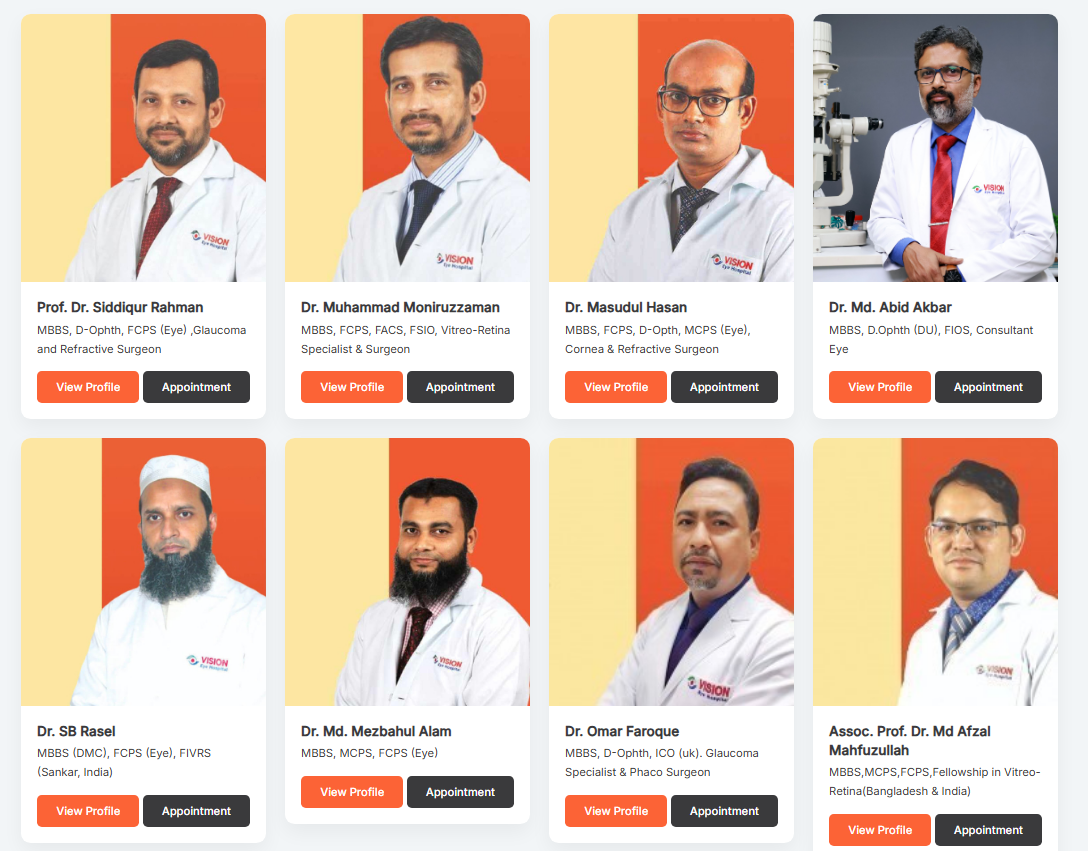
Dhaka offers excellent options—look for board-certified ophthalmologists with subspecialties (e.g., retina, cornea, glaucoma). Reputable hospitals include:
-
Vision Eye Hospital
-
Bangladesh Eye Hospital (multiple branches, e.g., Dhanmondi)
-
Ispahani Islamia Eye Institute and Hospital
-
Deen Mohd. Eye Hospital
-
Al Noor Eye Hospital
-
Dhaka Eye Care Hospital
-
Evercare Hospital Dhaka
Consider factors like specialization, patient reviews, advanced equipment (e.g., for LASIK or retina scans), and accessibility. Many top specialists collaborate across these centers.
Tips for Preparing for an Eye Appointment
Maximize your visit:
-
Bring your current glasses/contact prescription and list of medications.
-
Note symptoms, duration, and family eye history.
-
Avoid driving if pupils will be dilated (blurry vision for hours).
-
Arrive early for paperwork.
-
Ask about costs, follow-up, and treatments.
Prepare questions: "What tests do I need?" or "How can I prevent issues?"
Follow-Up Care and Monitoring Eye Health
After diagnosis:
-
Adhere to prescribed treatments (drops, glasses, surgery).
-
Schedule follow-ups as recommended—many conditions need ongoing monitoring.
-
Maintain healthy habits: Balanced diet, UV protection (sunglasses), screen breaks (20-20-20 rule), no smoking.
-
Annual or bi-annual checks for at-risk individuals.
Proactive care keeps eyes healthy amid Dhaka's demands.
Your vision is irreplaceable don't delay if something feels off. For expert evaluation, contact a trusted eye hospital like Vision Eye Hospital. Regular care today ensures clearer sight tomorrow. Stay vigilant and see clearly!


John Doe
10 days agoLorem ipsum dolor, sit amet consectetur adipisicing elit. Perferendis cum illum facere in exercitationem assumenda corporis itaque excepturi molestias voluptas, quibusdam accusantium, quae dolore iste eum aliquam saepe eius iure.
John Doe
10 days agoLorem ipsum dolor, sit amet consectetur adipisicing elit. Perferendis cum illum facere in exercitationem assumenda corporis itaque excepturi molestias voluptas, quibusdam accusantium, quae dolore iste eum aliquam saepe eius iure.